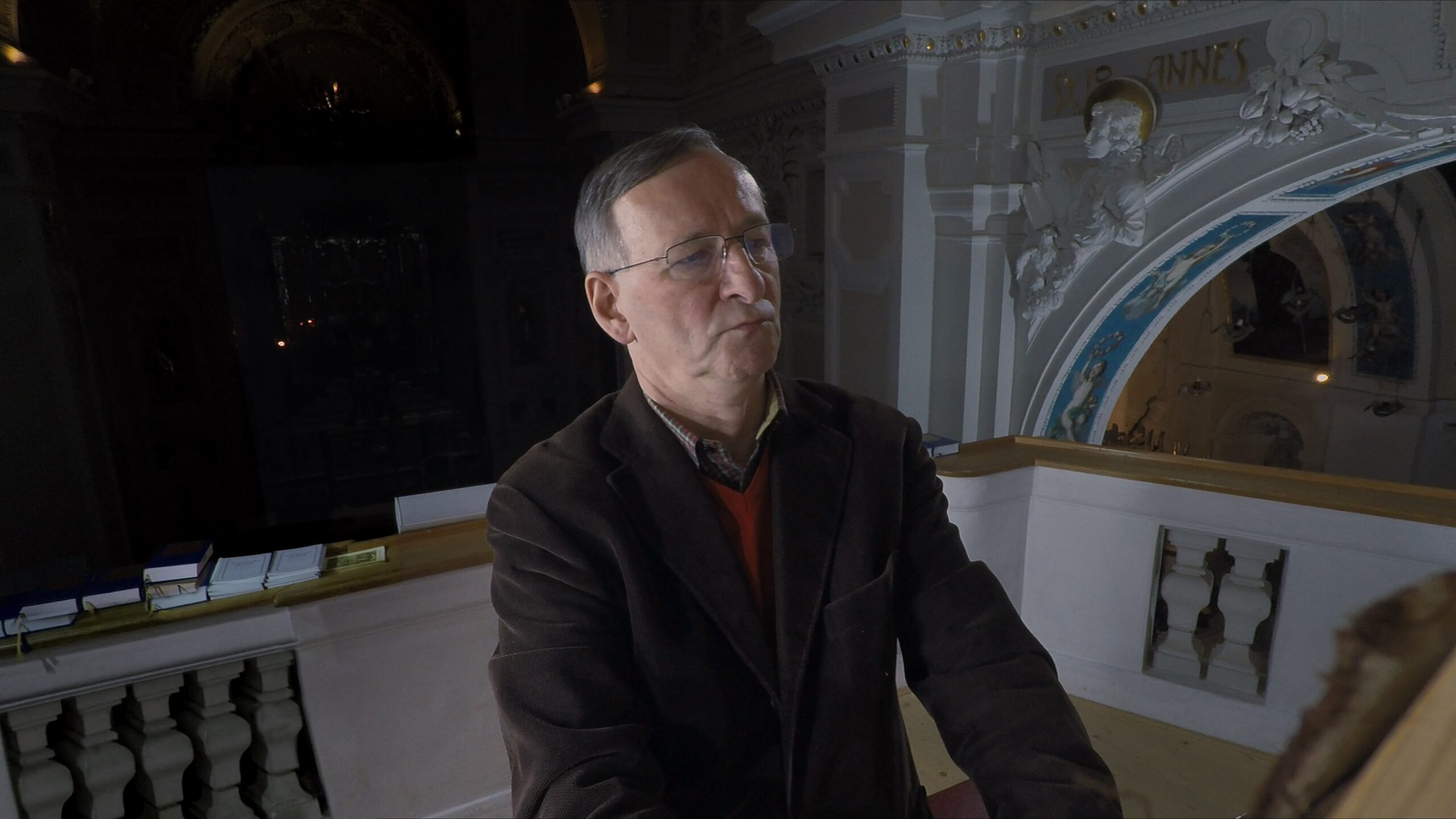
JAROSLAV TŮMA
ALEXANDR VOJTA
Director and currently one of the few truly independent filmmakers and video creators. He has produced dozens of recordings of musical performances, created a project for Czech Radio focusing on Early Music, and directed several feature films (Candidates, 2010, 76 min; Bloody Parliament, 2012, 84 min), more than ten documentaries (e.g., Path to Music, 38 min), and a seven-part satire, Martian Chronicles. He collaborates with the ensemble Musica Florea to record authentic interpretations of Antonín Dvořák's works.
He runs multimedia projects such as The Secret of Tones, Debating Club or Beer Shed.
Notes from Jaroslav Tůma
How long does it take to learn all of Bach’s organ works?
It took me several years. Initially, during my studies at the Prague Conservatory and the Music Faculty of AMU, and after a break where I focused mainly on other repertoire, I spent another four years on intensive self-study. I then dedicated myself to all of Bach’s works over three concert seasons from autumn 1990 to spring 1993. I performed all of Bach's compositions in two churches in Prague during twenty-one concerts. Even today, I still meet people who used to attend my concerts and remember them. But with Bach, we are never truly done! Whenever we have to play something again, we continue to work on it. So the correct answer is: more than fifty years. Whether that time has positively reflected in my results is for others to judge.
How and how long did the recording at Svatá Hora take?
Everything except for The Art of Fugue and a few minor pieces was recorded during COVID in 2020; it realistically took nine months from March to November, with a summer break when concerts were temporarily allowed, which I gladly took advantage of. We completed The Art of Fugue and a few minor works in 2022. In 2020, there were twenty-one evenings, and in 2022, three. In the meantime, the overall dramaturgy was developed. For the most part, everything was recorded live to achieve the most natural result. We all know examples of extremely polished recordings that can sound lifeless despite being pleasant to listen to. In 2023, both interior and exterior commentaries were prepared and recorded. The visual post-production was especially time-consuming, particularly for Mr. Vojta.
How much was it necessary to practice and register at Svatá Hora?
A humorously exaggerated answer might be that I visited so often that I started running into myself on the way there. Maybe a hundred times? Or more? I’ve been going there often since 2018 when the organ was completed. The idea for a complete performance had been maturing for some time.
How many steps must one climb to the choir?
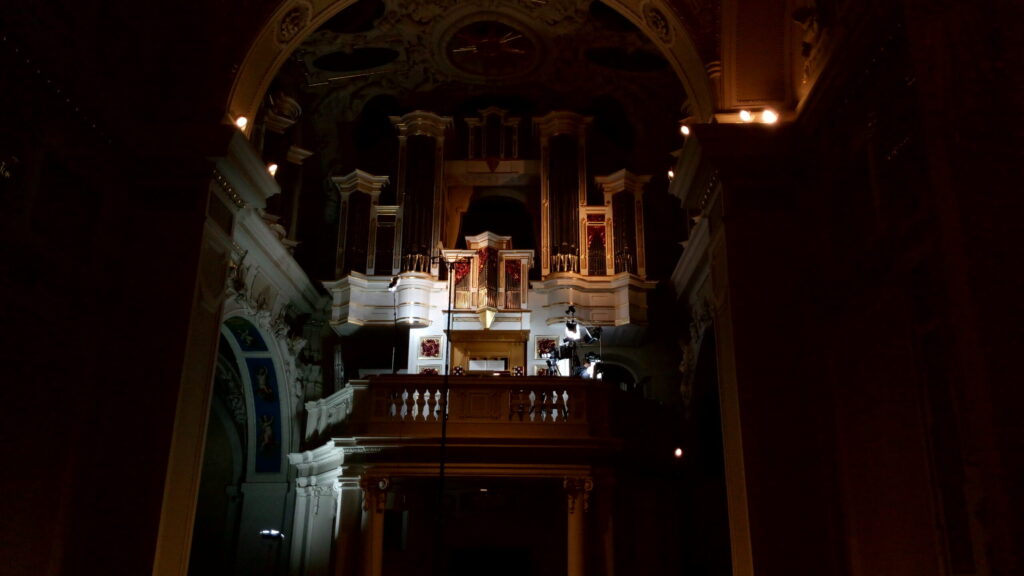
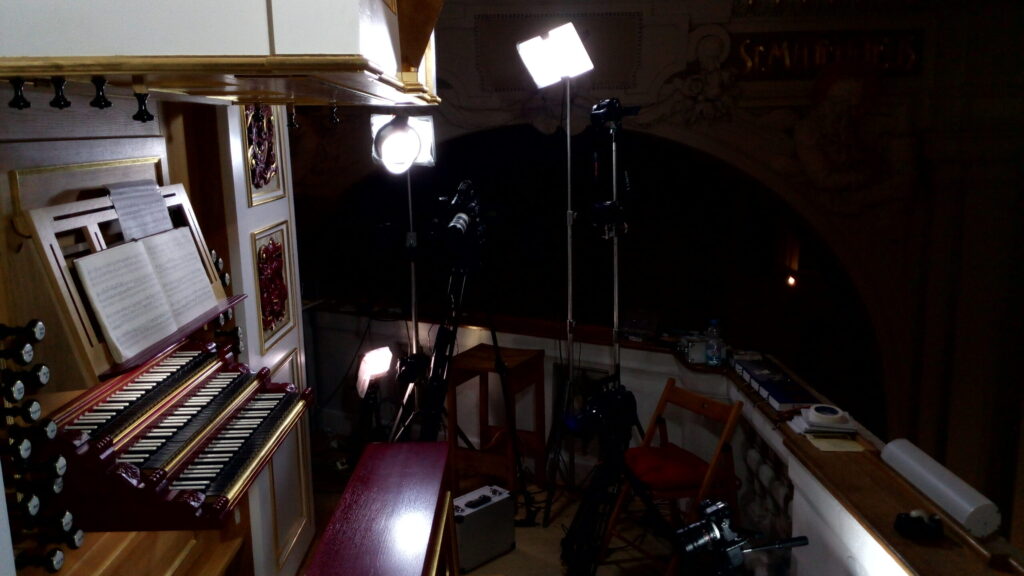
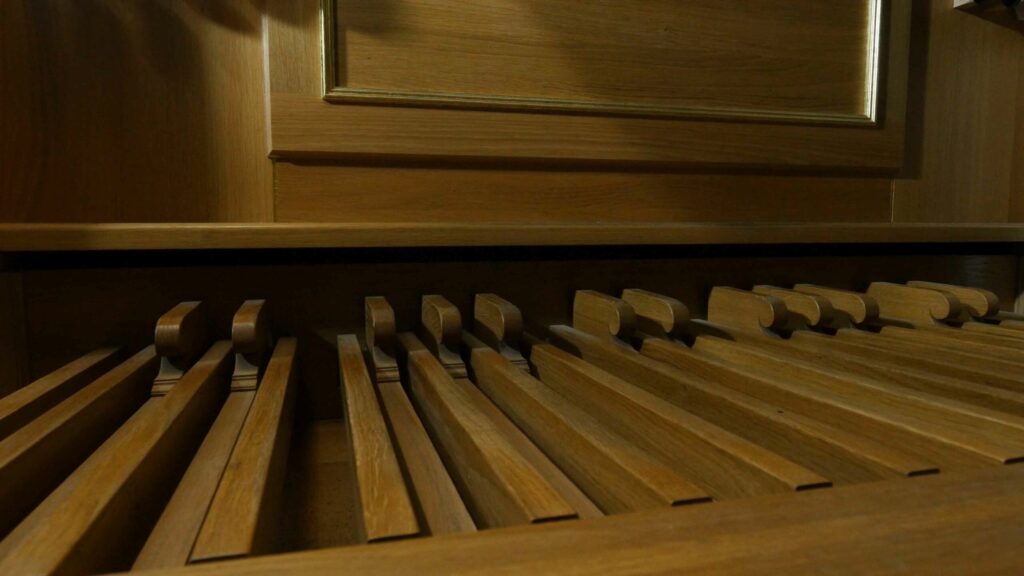
I didn’t count. I only ran up once or twice, maybe three times. Mr. Vojta probably counted them, as he transported all the equipment up to the choir with the help of his sons. And likely Vladimir Šlajch, who, according to his words, nearly lost his breath while carrying individual parts of the organ and many pipes during the completion of the organ. Lastly, the organists at Svatá Hora led by regenschor Pavel Šmolík.
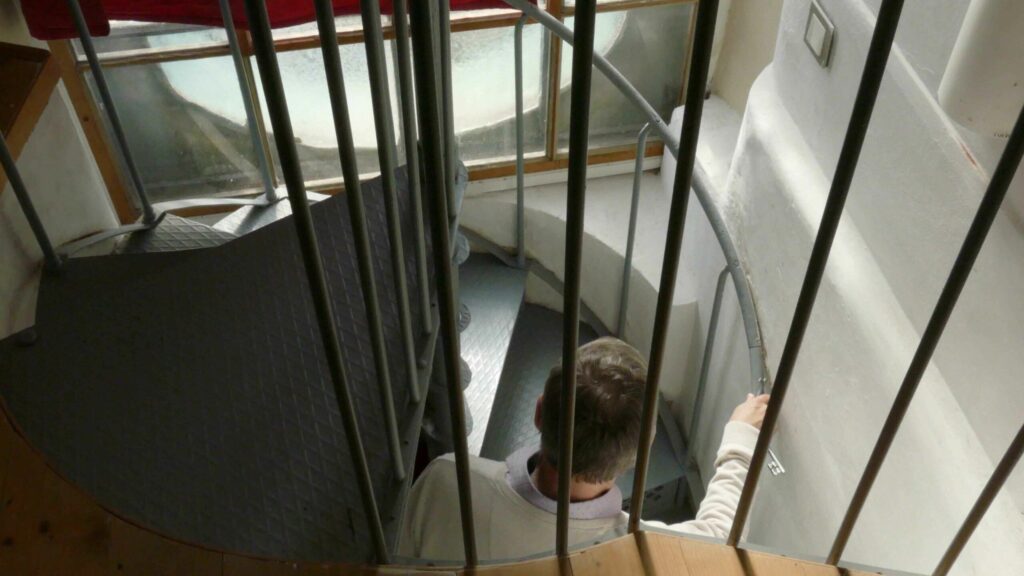
However, it’s not just about the number of steps; the staircase is narrow and winding. Plus, there’s desperately little space at the top. In fact, when I first brought Mr. Vojta there, he immediately declared, “Well, this definitely won’t work…”
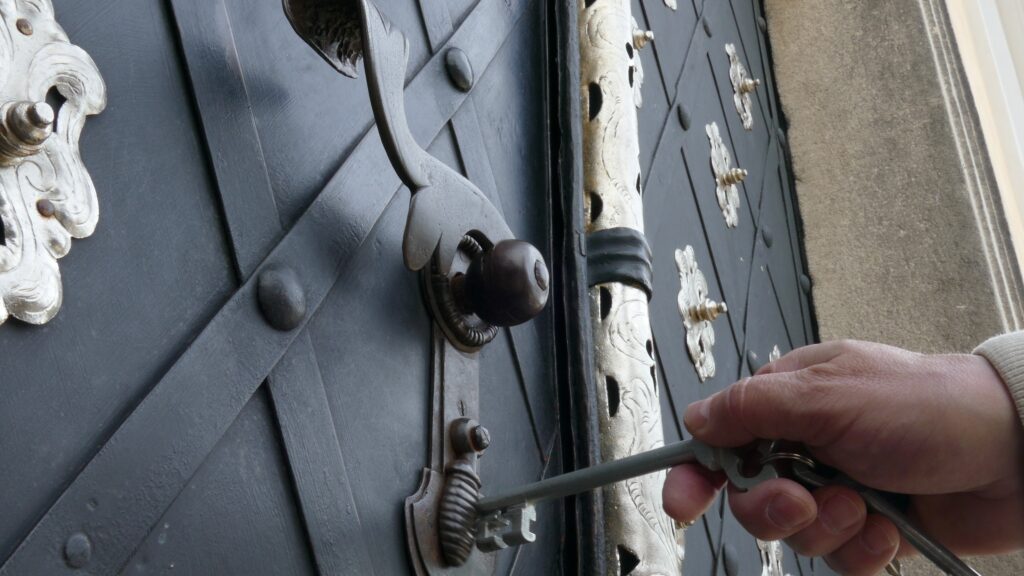
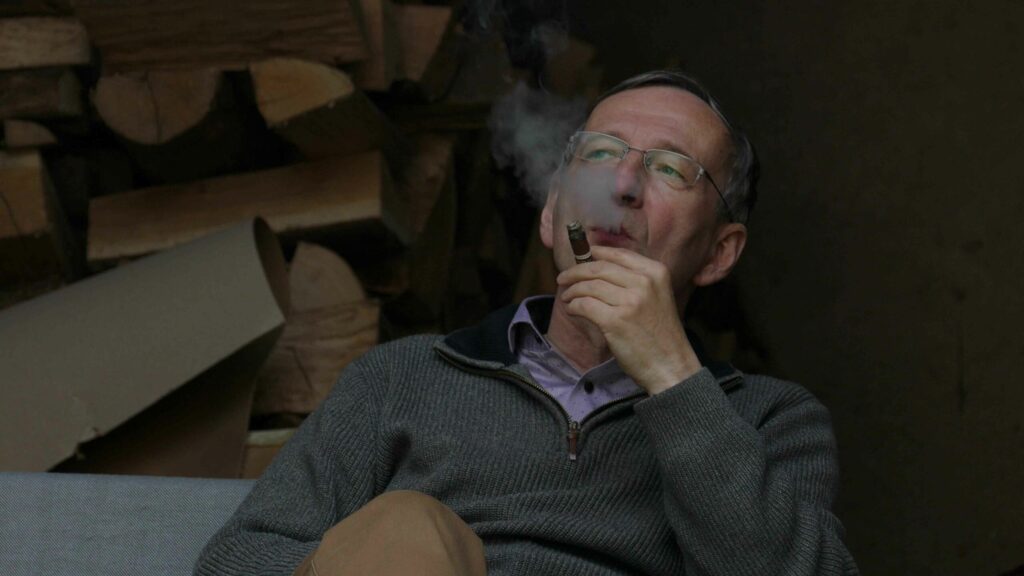
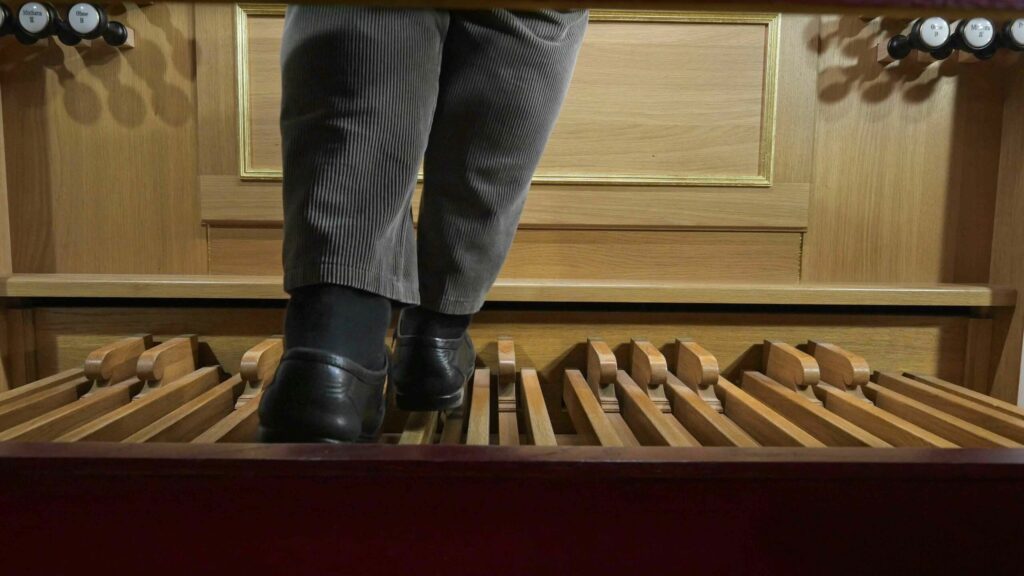
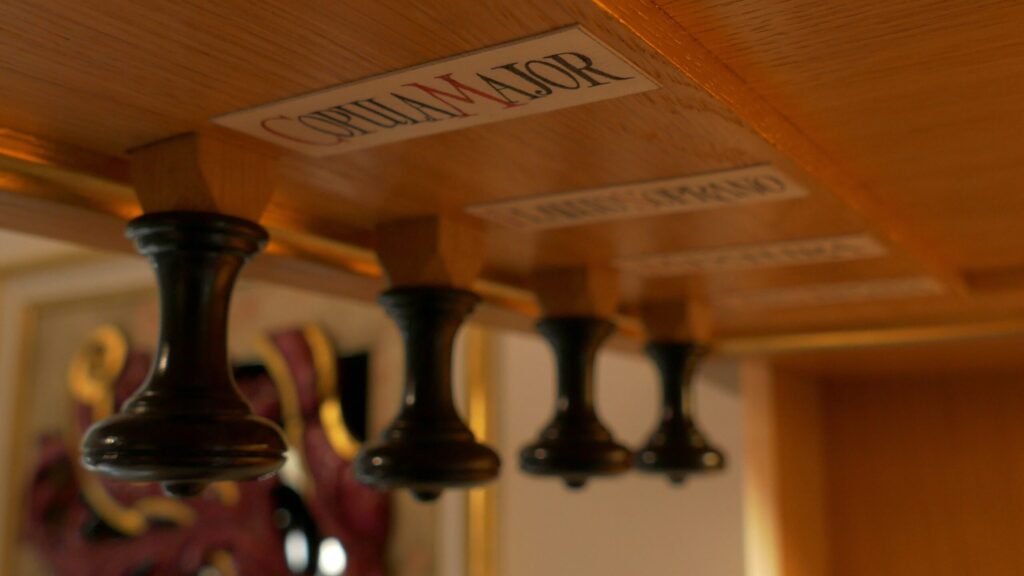
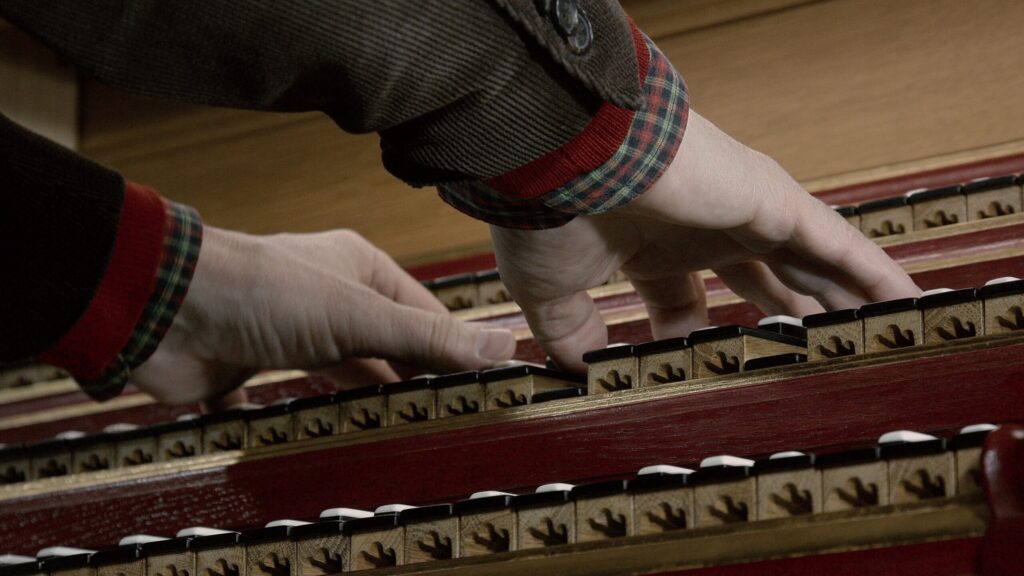
Organist and organ builder
People love to peek “under the lid”
Curiosity is natural, and understanding “how things are done” can help potential followers with their projects. We answer inquisitive questions, but we don’t want to reveal everything. There are know-how secrets that are highly valuable. Something important was reportedly revealed by Bach himself: “Anyone who is as diligent as I am can achieve the same as I have.” Yet he somehow overlooked the fact that talent is also important. And that one needs a bit of luck too—such as in the people around them, their willingness, and kindness. Without their willingness to help, our project wouldn’t have come to fruition. We express our immense gratitude to all of them in the credits.
There are billions of people in the world. For most of them, “some” Bach is probably “irrelevant.” However, many people are not unfamiliar with his music. There are surely many organ interpreters—thousands or perhaps tens of thousands? There are also many recordings of Bach’s organ music. However, we can barely find a few dozen complete collections; playing all of Bach is challenging. Many of these are historical, while other complete sets are more recent, and new ones are still being created, primarily available on CDs or online. Surprisingly, although there are quite a few audiovisual recordings of Bach’s works available, there has yet to be a concert-like collection of all his organ compositions.
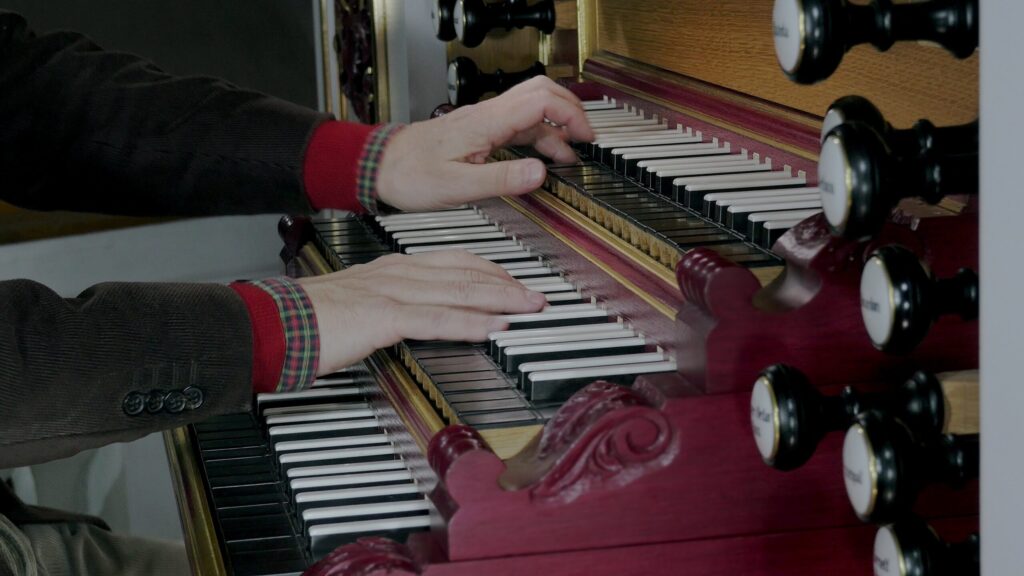
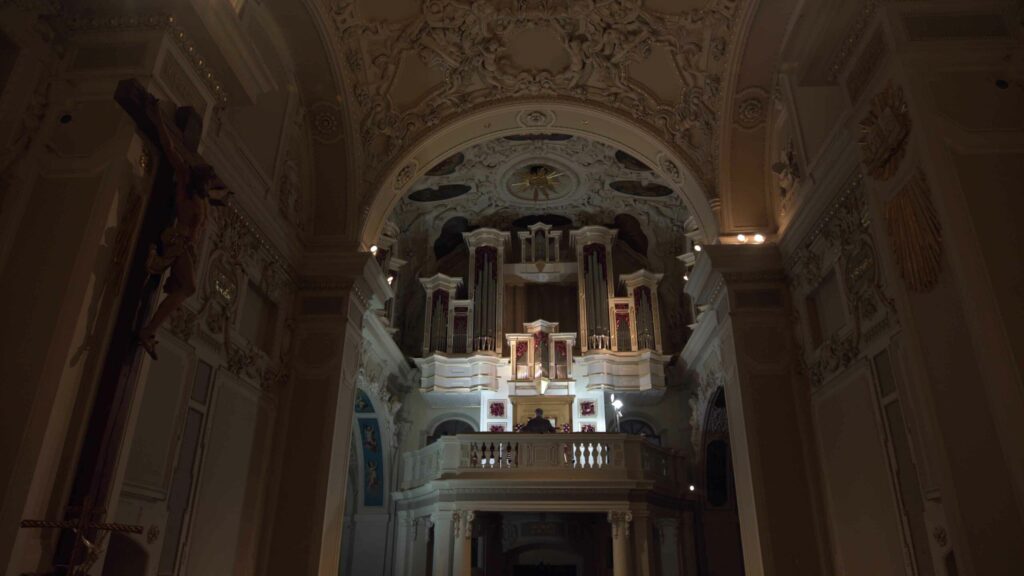
One can presume that there are two reasons for this gap. Firstly, given the circumstances arising from the state of our world, this undertaking regarding organs and Bach is significantly non-commercial in nature; secondly, the realization itself is extraordinarily difficult. Despite all the technical advancements in sound and video editing, making a larger number of cuts in audiovisual platforms is very impractical, even though audio alone has long been uncomplicated. Our solution, however, relied on an approach where cuts were limited to the bare minimum; in each piece, there are hardly a few, if any, usually due to repetitions of sections. Sometimes a plane flies by, or something begins to hang in the organ (a tone may be stuck) due to a recent storm that has suddenly increased the relative humidity, which the mechanical action of the organ does not appreciate. While the organs at Svatá Hora are from 2018, they ideologically represent a kind of reincarnation of Baroque organs. Thus, they are purely mechanical. Vladimir Šlajch was inspired by old organ builders: Abraham Starck, Bedřich Semrád, or Ondřej Kokštein from Příbram. He also took inspiration from the traditions of Central German organs. The result is a unique instrument that sometimes challenges an inexperienced player but inspires and delights a skilled one. It’s akin to a noble racing horse—an average rider has no chance, while an experienced professional revels in it. Jit is similar to with a noble racehorse. An average rider has no chance, an experienced professional rejoices....
Footnotes from Jaroslav Tůma
The other day, I was standing in a tram and noticed the screen of a young man lounging in the seat below me. I was struck by how he surfed back and forth, watching nothing but short videos. Apple wireless headphones in his ears, clips with no coherence, ranging from cars and scooters to various bands, and comic skits. His attention lasted a maximum of five or six seconds for everything. Some videos clearly didn’t engage him, so he switched away even earlier. It’s said that this is not uncommon; many young people spend their free time this way. However, if future generations turn out largely like the consumer of ephemeral videos, then we are in trouble. It would be “the fall of the Roman Empire”...
I recalled how some at Czech Radio claimed that programming must adapt to current trends and that only music segments of a maximum of three minutes can be included in broadcasts, as listeners can’t endure anything longer and would rather switch the station. Should I only present the shortest and most digestible pieces to visitors at my concerts and consumers of my recordings? I believe not. Adapting to the abilities of the majority seems pointless to me. Modern physics says that anything that arises in the universe never truly disappears; it exists in some form forever. All religions think similarly. So I prefer to play for myself—simply because what I do simply is...
The paradox that arises from all this is that I don’t need to care at all about what others think of my playing, how many people come to the concert, or how many listeners are fully engaged with the concert or recording. On the other hand, I truly desire for people to appreciate the beauty and the full content of the message I offer them. This is also because I need feedback, and I respond to it with my playing. Of course, I am sincerely grateful for it.
 English
 Czech